


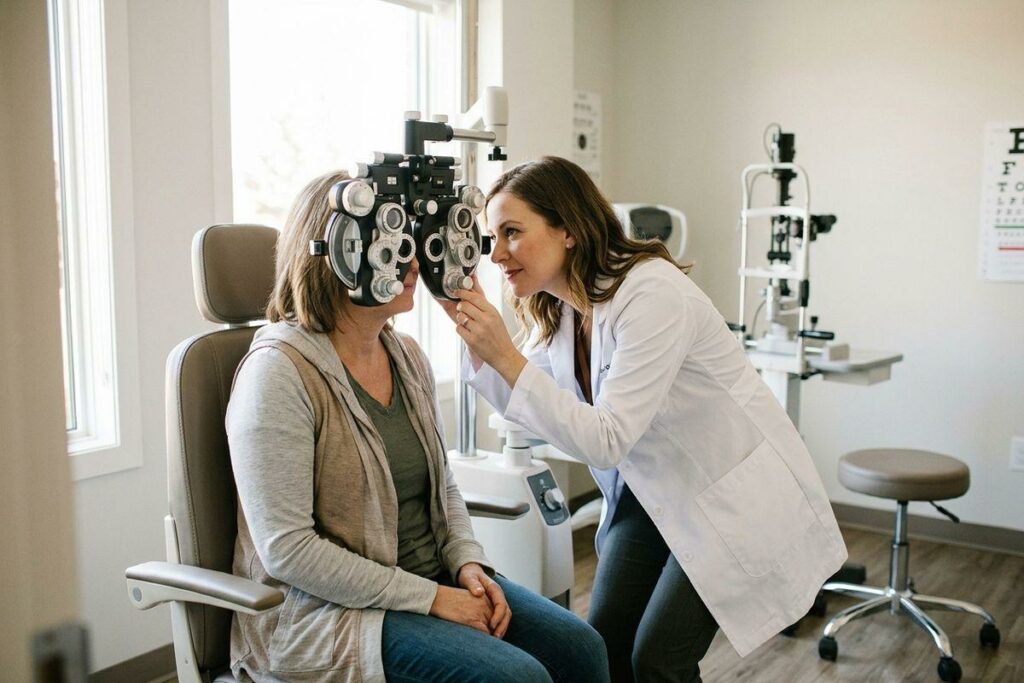
High blood sugar does more than affect your energy and appetite. It also reaches the tiny blood vessels inside your eyes, and those vessels don’t hold up well under years of strain. The damage builds quietly. Many people feel fine until their vision changes, which is why a diabetic eye exam looks for trouble you can’t feel yet.
Diabetes leads to vision loss when high blood sugar damages the small vessels in your retina, causing them to leak, swell, or grow abnormally until your sight turns blurry or blocked.
Monitoring blood sugar and keeping up with regular eye exams can slow the process. Finding changes early also leaves you with more treatment options.
Eye Conditions Diabetes Can Cause
Diabetes affects your eyes in more than one way, and each condition damages a different structure. Here’s what your optometrist looks for during an exam.
Diabetic Retinopathy
Damaged vessels in the retina leak fluid or sprout new growth where it doesn’t belong, and this is the condition behind most diabetes-related vision loss. It usually affects both eyes.
Retinopathy moves through stages, from mild changes to advanced disease. The early stages often cause no symptoms, so many people don’t find out until damage has already built up. Anyone with type 1 or type 2 diabetes can develop it. Your risk increases the longer you’ve lived with diabetes and the harder your blood sugar has been to manage.
Diabetic Macular Edema
The macula sits at the centre of your retina and handles the detailed vision you use for reading and driving. When fluid collects there, the tissue swells.
Straight lines can look wavy. Print can look fuzzy even with your glasses on.
Cataracts
Diabetes can also speed up a cataract, a clouding of the lens inside your eye that scatters light and dulls contrast. People with diabetes tend to develop them earlier in life.
Extra sugar pulls water into the lens and clouds the tissue over time. Headlights may cause more glare at night, and whites can take on a yellowed cast.
Warning Signs of Diabetic Eye Damage
Your eyes usually give small signals before anything major happens. Mention it to your optometrist if you notice any of these:
- Blurry vision that comes and goes
- Floaters or dark spots drifting across your view
- Trouble seeing at night or in dim rooms
- Colours that look washed out
- Small print that’s harder to read than it used to be
These signs don’t always mean something serious, but they’re worth a closer look.

When Diabetic Eye Symptoms Need Urgent Care
A few symptoms shouldn’t wait for your next scheduled visit. Call for emergency eye care right away if you experience:
- Sudden blurriness in one or both eyes
- A burst of new floaters or flashes of light
- A dark curtain or shadow over part of your vision
- Eye pain or redness that won’t settle down
Getting seen quickly can protect vision that’s at risk.
Treatment Options for Diabetic Eye Conditions
What happens next depends on your condition and how far along it is. Ask your optometrist to walk you through the choices before you commit to anything.
Anti-VEGF injections can slow leaking vessels and bring down swelling in the macula. Laser therapy can seal leaking spots or shrink abnormal vessel growth across the retina.
In advanced cases, a surgeon may recommend retinal laser treatment or a vitrectomy, which clears blood and scar tissue out of the eye. Whatever route you take, keeping your blood sugar steady supports the treatment.
Can Blurry Vision Improve?
It depends on what caused it. Blood sugar swings pull fluid into the lens and change its shape, and vision often sharpens again within a few weeks once your levels settle.
Retinal damage behaves differently. Early treatment may preserve the sight you still have and slow further loss. The chance of restoring vision that has been lost largely depends on the nature and duration of the damage, the area affected, and the treatment options available.
Steps to Protect Your Vision
You have more say here than you might think, and none of it requires a dramatic overhaul. A handful of habits can make a real difference over the years:
- Book a comprehensive eye examination once a year, or more often if your optometrist recommends it
- Work with your care team to keep your blood sugar in your target range
- Keep an eye on blood pressure and cholesterol, since both put strain on the same vessels
- Ask for help quitting if you smoke, because tobacco can worsen retinopathy
- Move most days, even if that’s a 20-minute walk after supper
And tell your optometrist that you’re diabetic, plus how long it’s been. That changes how closely they’ll want to monitor you.
Book Your Diabetic Eye Exam This Year
Diabetes already asks a lot of your attention, and your eyes are easy to put off when nothing hurts. An exam can show you what’s happening at the back of your eye long before you’d ever feel it.
At Brighton Eyecare, we examine the retina for early diabetic changes, and we care for every age group, from young kids to grandparents. Book your eye exam and let’s take a look together.