



Many people in Saskatoon find themselves wiping away tears the moment they step outside, especially on cold, windy, or bright days. Your eyes often water outdoors because the environment triggers a protective reflex that produces extra tears.
While this response is common, frequent or excessive watering can also point to dry eye, seasonal allergies, contact lens irritation, or tear drainage problems. A comprehensive eye exam can help identify what’s causing your symptoms and what kind of treatment may help.
Causes of Watery Eyes
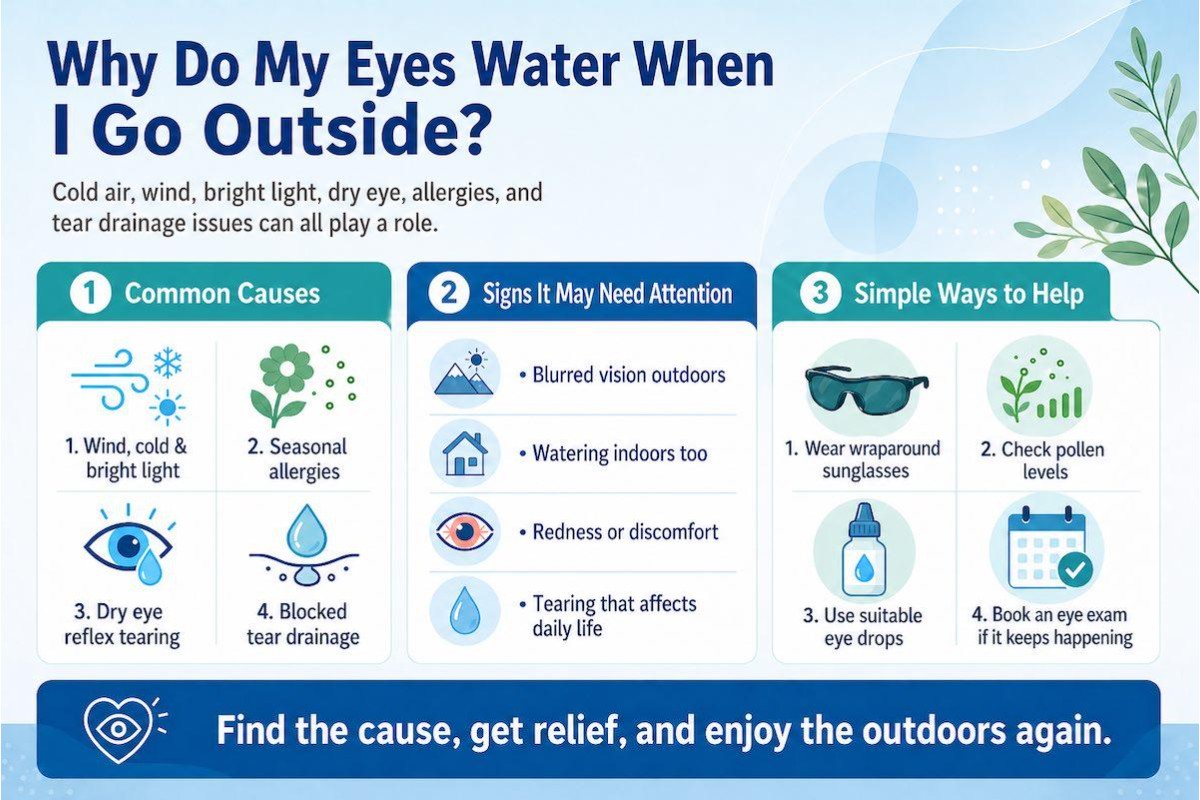
When your eyes sense a threat from the elements, they respond by ramping up tear production. This reflex is completely normal, but it deserves attention when it happens often or feels out of control. Seasonal allergies are another common factor that leaves your eyes watery, itchy, and irritated when pollen counts rise.
Dry eye is another frequent, yet less obvious, cause of excessive tearing. When your eyes lack the right quality or quantity of tears, they feel irritated and often flood themselves with reflex tears in response.
However, these tears lack the necessary oils to properly lubricate the eye, so they may evaporate too quickly and fail to soothe the underlying dryness. This creates a frustrating cycle in which your eyes continue to water without offering any relief.
The Role of Tear Ducts in Watery Eyes
Your eyes are constantly producing a thin layer of tears to stay comfortable and clear. Those tears don’t just evaporate; they drain away through tiny openings along the edges of your eyelids, called puncta. From there, they travel through small ducts and eventually into your nose, which is why your nose runs when you cry.
When this drainage system works the way it should, tears stay balanced, and your eyes feel comfortable. The whole process happens without you noticing it at all.
However, sometimes those drainage channels become narrowed or partially blocked. Age, long-term exposure to irritants, and past infections can all contribute to this. When the ducts can’t drain tears fast enough, the overflow spills down your cheeks instead.
Cold air and wind can make a partial drainage issue more noticeable, which is why your eyes may water more on a winter walk than they do indoors. You might notice your eyes water far more on a cold winter day than they do indoors. Mention this kind of gradual worsening to your optometrist during your next visit.
Signs Your Watery Eyes Need Attention
Occasional watering on a windy day is normal, but certain signs suggest you may need professional care. Watch for these:
- Blurred vision when you’re outside or looking downward
- Watering that happens indoors as well, not just when you go outside
- Redness, discharge, or discomfort alongside the tearing
- Tearing that interrupts everyday activities like driving or reading
Schedule a comprehensive eye exam to pinpoint the cause if you notice any of these symptoms. An evaluation covers everything from your tear film quality to your drainage function to give you a clear picture of your eye health.
Simple Ways to Reduce Eye Watering Outside
A few practical changes can make a noticeable difference when you’re spending time outdoors. Wraparound sunglasses are a simple tool that creates a physical barrier between your eyes and wind, light, and airborne particles. On bright or breezy days, they can significantly cut down on reflex tears. Choose wraparound sunglasses with UV protection, and replace scratched or damaged lenses. If you’re unsure whether an older pair still blocks UV properly, ask your optician whether they can test them.
If allergies tend to affect you, keeping track of local pollen levels during spring and fall can help you plan outdoor activities on lower-count days. For mild allergy symptoms, over-the-counter allergy eye drops may help, but ask your optometrist or pharmacist which type is appropriate, especially if you wear contact lenses or use other eye medications.
When to Seek Professional Care
If watery eyes are getting in the way of your daily life, whether that’s your morning walk, your commute, or a favourite outdoor hobby, it’s a good time to book an eye exam. Your optometrist can examine your tear drainage, check for dry eye, and screen for allergies or other contributing factors.
Optometrists can offer targeted options to address the root cause of your watery eyes. For example, dry eye therapy targets the source of the problem rather than just managing the symptoms.
Update your contact lens fitting if you wear lenses, as ill-fitting contacts can disrupt your tear film and leave your eyes more reactive to the environment. Explore specialty eye care services to assess and address structural or allergy-related tear duct concerns that go beyond what basic home remedies can fix.
Find Relief and Enjoy the Outdoors Again
Don’t let watery eyes keep you from enjoying your time outside. Reach out to a professional to find the right path forward for your eye health and overall comfort.
Contact the team at Brighton Eyecare today to book a comprehensive eye exam and take the first step toward clear, comfortable vision. It’s a beautiful day outside, and you deserve to enjoy it fully!